Battery Energy Storage Systems (BESS) are rapidly becoming foundational infrastructure for the modern energy economy. As renewable energy expands, electrification accelerates and grid volatility increases, storage is no longer viewed as a niche technology. It is becoming an operational necessity.
Utilities, renewable developers, industrial operators, and data centers are all scaling deployments to stabilize supply, manage peak demand, and improve resilience. But as the market grows, expectations for BESS platforms are evolving as well. Today’s systems must deliver more than energy capacity. They are expected to provide long-term reliability, high uptime, safe operation, predictable maintenance costs, and flexibility across increasingly diverse applications. At the same time, systems are becoming larger, denser, and more customized.
This evolution is bringing greater attention to one of the most overlooked aspects of BESS design: fluid handling.
Reliable fluid systems are critical for BESS
For years, industry conversations around energy storage have focused heavily on battery chemistry, power electronics, and software controls. Those elements are obviously critical. However, thermal management —more specifically, the reliability of the fluid systems supporting it — is emerging as a major differentiator in overall platform performance.
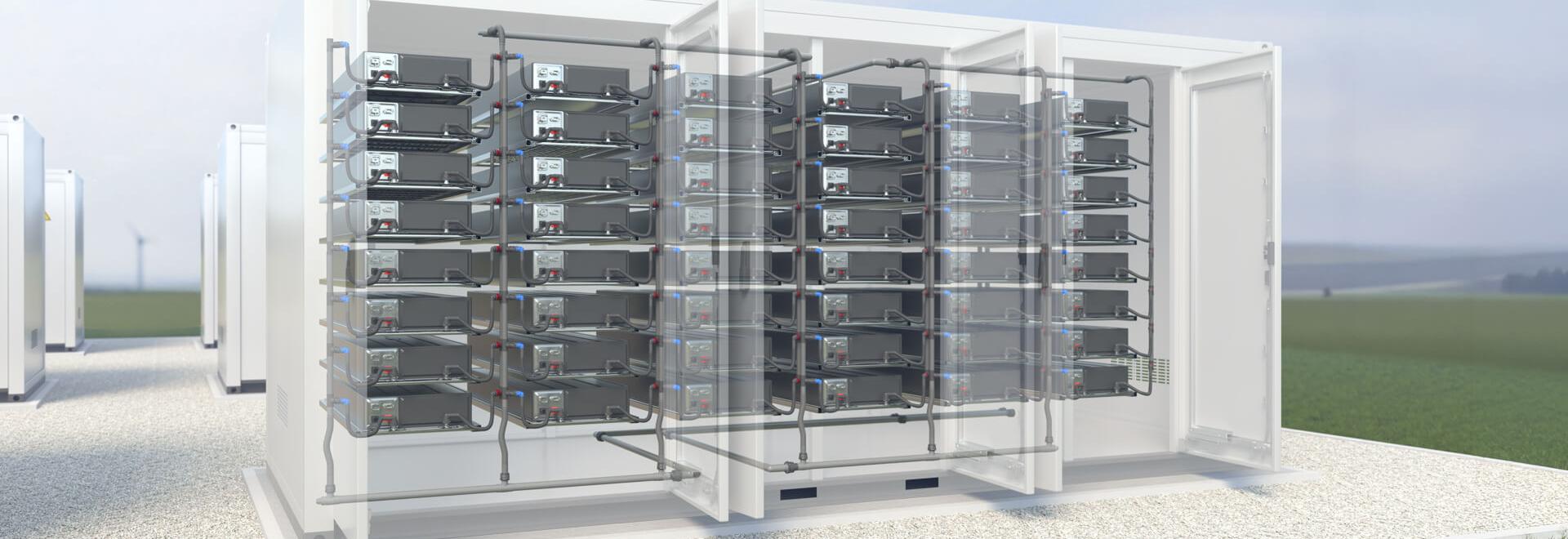
As energy density rises and enclosure footprints shrink, liquid cooling is increasingly becoming the preferred thermal management strategy. Compared with traditional air-cooling approaches, liquid cooling enables more precise temperature control, improved cell balancing, and safer operation across varying climates and duty cycles. And improved thermal management helps extend the lifetime of BESS platforms.
But liquid cooling systems also introduce engineering complexity.
Every fluid line, connector, manifold, valve, and service point becomes part of the overall performance equation. In compact, high-voltage BESS environments, even relatively small weaknesses in fluid connections can create significant operational challenges. A cooling loop is only as reliable as its weakest point.
Preventing downtime, damage
Across the market, many field-level maintenance and reliability issues can be traced back to fluid handling limitations. Coolant leaks may trigger downtime and equipment damage. Maintenance procedures sometimes require draining entire cooling loops, increasing service time and labor costs. Dense enclosure designs can complicate repairs and elevate technician safety risks.
Over a 10- to 20-year asset lifecycle, these challenges can have a major impact on total cost of ownership.
At the same time, BESS integrators face growing pressure to balance customization with scalability. Every project may have different requirements related to climate, power capacity, footprint, or maintenance preferences. Yet integrators still need repeatable architectures that allow fast deployment, controlled engineering costs, and simplified life cycle support.
The answer is modular system architecture built around scalable, validated subsystems — including fluid handling, and the industry is beginning to rethink thermal management not as a secondary subsystem, but as a strategic design consideration from the earliest stages of platform development.
Dry Break technology
At ARaymond, we are seeing increasing demand for fluid handling technologies that support modular scalability, leak-free maintenance, lifecycle durability, and simplified serviceability. Integrators want solutions that reduce downtime while helping them accelerate deployment schedules and maintain operational reliability.
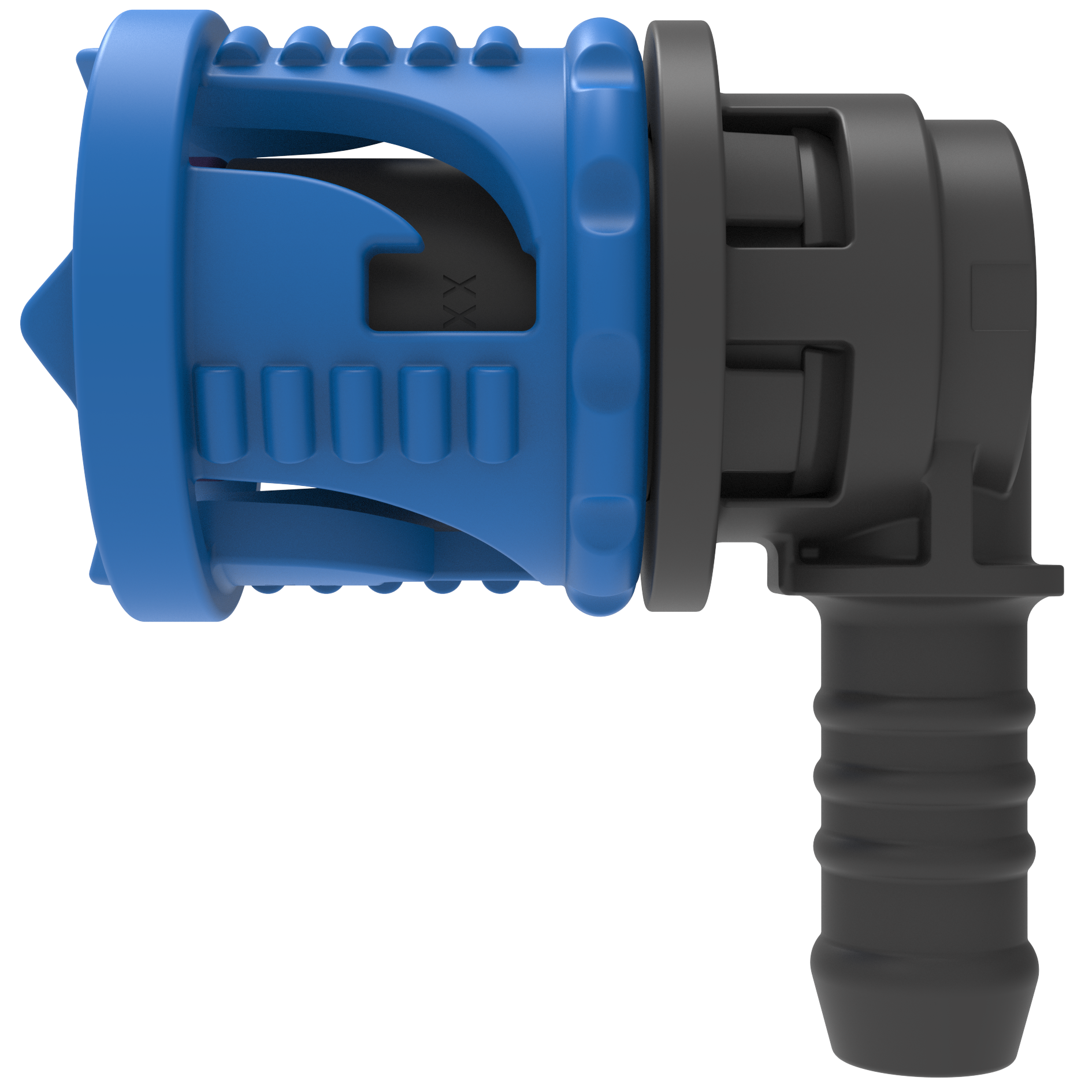
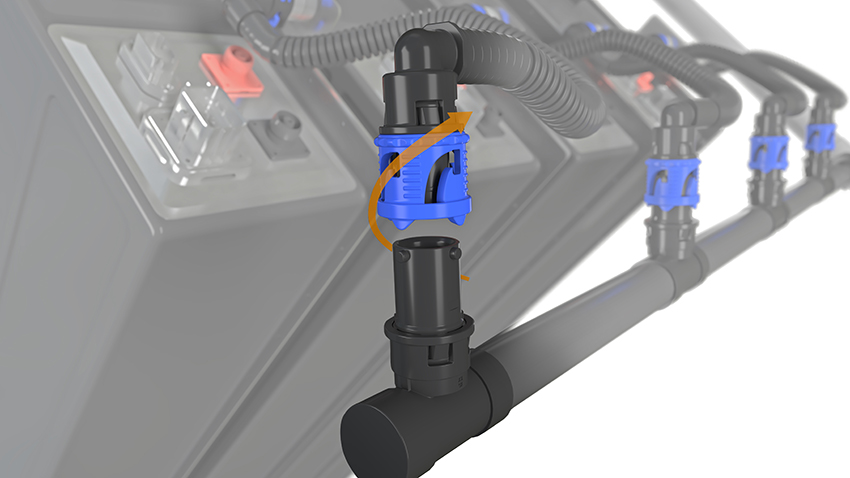
One example is the Dry Break double shut-off connector technology.
Dry Break systems are designed to prevent fluid spillage during connection and disconnection. When servicing a battery pack, technicians can isolate the cooling circuit and disconnect components without draining the entire system. Fluid remains sealed on both sides of the interface.
This may sound like a relatively small design feature, but at the system level it creates meaningful operational advantages. It can eliminate downtime, improve technician safety, lower coolant replacement costs, and simplify maintenance procedures. For integrators, it also supports faster installation and more standardized service workflows across deployments. As BESS becomes increasingly critical infrastructure, these types of serviceability advantages become more important.
At ARaymond, we are leveraging more than 40 years of automotive fluid handling expertise to support this transition. Automotive applications require extremely high levels of durability, process discipline, and reliability under demanding operating conditions. Those same expectations are now becoming standard in the energy storage market.
The BESS industry is also evolving quickly geographically. While battery production remains heavily concentrated in China, much of the system integration activity is expanding across Europe and North America. Integrators are increasingly looking for regional supply chain partners capable of supporting scalable, customizable fluid handling architectures with rapid turnaround times. This is where partnership becomes critical.
Unlike more mature industrial sectors, fluid handling standards in BESS are still developing. As a result, competitive advantage increasingly comes from co-engineering collaboration rather than simple component sourcing. Integrators want partners who understand not only fluid interfaces, but also manufacturing realities, maintenance procedures, packaging constraints, and long-term operational requirements.
The companies that will succeed in energy storage over the next decade will not differentiate themselves on battery capacity alone. Competitive advantage will come from reliability, maintainability, lifecycle economics, and operational uptime.
Fluid handling sits at the center of that shift. As the industry matures, designers who treat thermal management systems as strategic assets, rather than secondary considerations, will be better positioned to build safer, more scalable, and more serviceable BESS platforms for the future.

By Florent Lafont, EMEA Business Development Manager, ARaymond